01More food, or the same?
| Your dog | Winter food |
|---|---|
| Walks over an hour a day or goes hiking and camping often | More. Start with about 10% and adjust by weight |
| Steady 30–60 minute walks every day | Usually the same. Add about 5% if weight drops |
| Indoor dog in a heated home, walking less | Keep it the same or trim a little, and cut treats too |
| Puppy or thin senior | Weigh every two weeks and add food if weight drops |
| Already on the heavy side | Don't add. Winter is when dogs gain weight |
Why the split? Dogs burn extra calories when they keep moving outside in the cold for long stretches. The colder it is, the more the body shivers and raises its metabolism to hold its temperature. But dogs spend most of the day in a warm 18–22°C (64–72°F) room. Their cold-weather energy use barely changes, while walks get shorter and treats stay the same, which is how dogs put on a kilo or two over winter.
If you add food
- Go up 10% at a time: a dog eating 100 g a day goes to 110 g. Watch for about two weeks, then decide again.
- Check weight and ribs: weigh every two weeks. You should feel the ribs lightly when you run a hand along the side. If you can't, the dog has gained.
- Watch the poop: soft stools or suddenly more poops after the change mean too much. Compare with our poop condition guide.
- Mind the water: dogs drink less in winter while heating dries the air. Top up the water bowl after long walks.
- Treats count: keep treats under about 10% of daily calories. If you increased meals, don't increase treats.
02Dogs who need a coat
- Short or single coats: Chihuahuas, Italian Greyhounds, Dachshunds, French Bulldogs, Min Pins and other dogs with little undercoat. Poodles and Bichons with a short winter trim belong here too.
- Small dogs: the smaller the body, the faster it loses heat.
- Short legs: the belly rides close to cold ground and snow.
- Puppies, seniors, thin or sick dogs: they regulate temperature poorly or have little body fat.
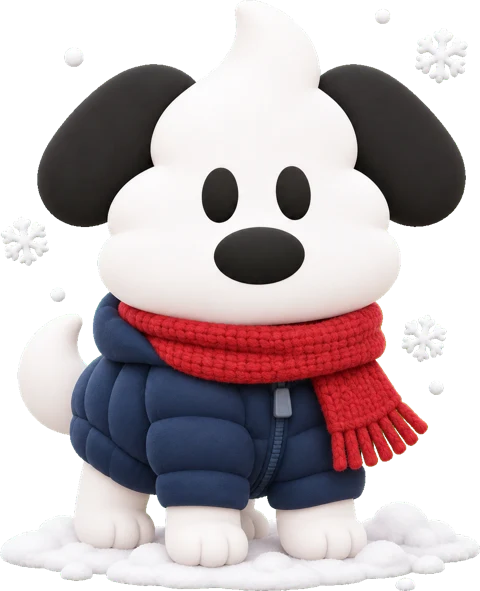
Shivering, lifting paws one after another, hunching or refusing to walk on means your dog is cold. Put a coat on and shorten the walk.
03Dogs who enjoy winter without one
Jindos, Siberian Huskies, Alaskan Malamutes, Samoyeds and other dogs with a dense double coat are wearing a down jacket already. The outer coat blocks snow and wind, and the undercoat traps a layer of warm air. A thick coat on these dogs flattens that undercoat, shrinks the air layer and overheats them within minutes of walking. Clothes can also rub the fur into static and mats. Rolling in the snow is how these dogs enjoy winter. That doesn't mean they belong outside. Keep them indoors with the family and let them enjoy the cold on daily walks.
Not sure with a mixed breed? Part the fur with your fingers. If you see a soft, cotton-like layer under the outer hairs, it's a double coat. Even then, keep walks short below about −10°C (14°F), in rain or sleet, and for older dogs.
04How to pick a warmer coat
- Covers the chest and belly: the belly has the thinnest fur. A coat that wraps the belly is far warmer than a back-only vest.
- Wind- and water-resistant shell, fleece inside: knits look cute but let wind through and get colder when wet with snow.
- Free front legs and shoulders: rubbing in the armpits or an odd gait means the size is wrong. Two fingers should fit under the neckline.
- Leave room to pee: for male dogs, pick a coat that's short underneath so it stays dry.
- Reflective strips: winter evenings get dark early, so after-work walks are mostly in the dark.
- Take it off indoors: a coat in a heated home gets too hot, and a wet coat chills the dog.
Don't forget the paws
Winter sidewalks are covered in de-icing salt. It cracks and stings paw pads, and dogs can swallow it while licking. After walks, rinse the paws with lukewarm water, dry them well and use paw balm on any cracks. Booties are great if your dog is used to them.
Log it together with POOPIEMATE
See potty and walks with your family on one screen.
Spot an off day right away.